///_Articles
How Fast Can You Make Money With Affiliate Marketing? A Realistic Timeline

Some affiliates see their first sales within days. Others build for several months before the first payment arrives. Both paths are normal, and the difference usually comes from what each person starts with: an existing audience, a budget for ads, or an empty page and a plan.
Anyone planning to make money with affiliate marketing gets more from a range of dates than from a single number. This guide lays out a timeline in four stages, from the first week to the second year. It explains what counts as making money, which factors set the pace, and which habits shorten the road. Where a number comes from a named source, the source is given. Where a number is only an illustration, it is labeled as one.
The sources reviewed for this guide do not give a verified figure for how long affiliates take to earn a first commission, so the timeline below is built from program terms, platform documentation and simple arithmetic. It describes ranges and milestones, which makes it a planning tool.
Key Takeaways
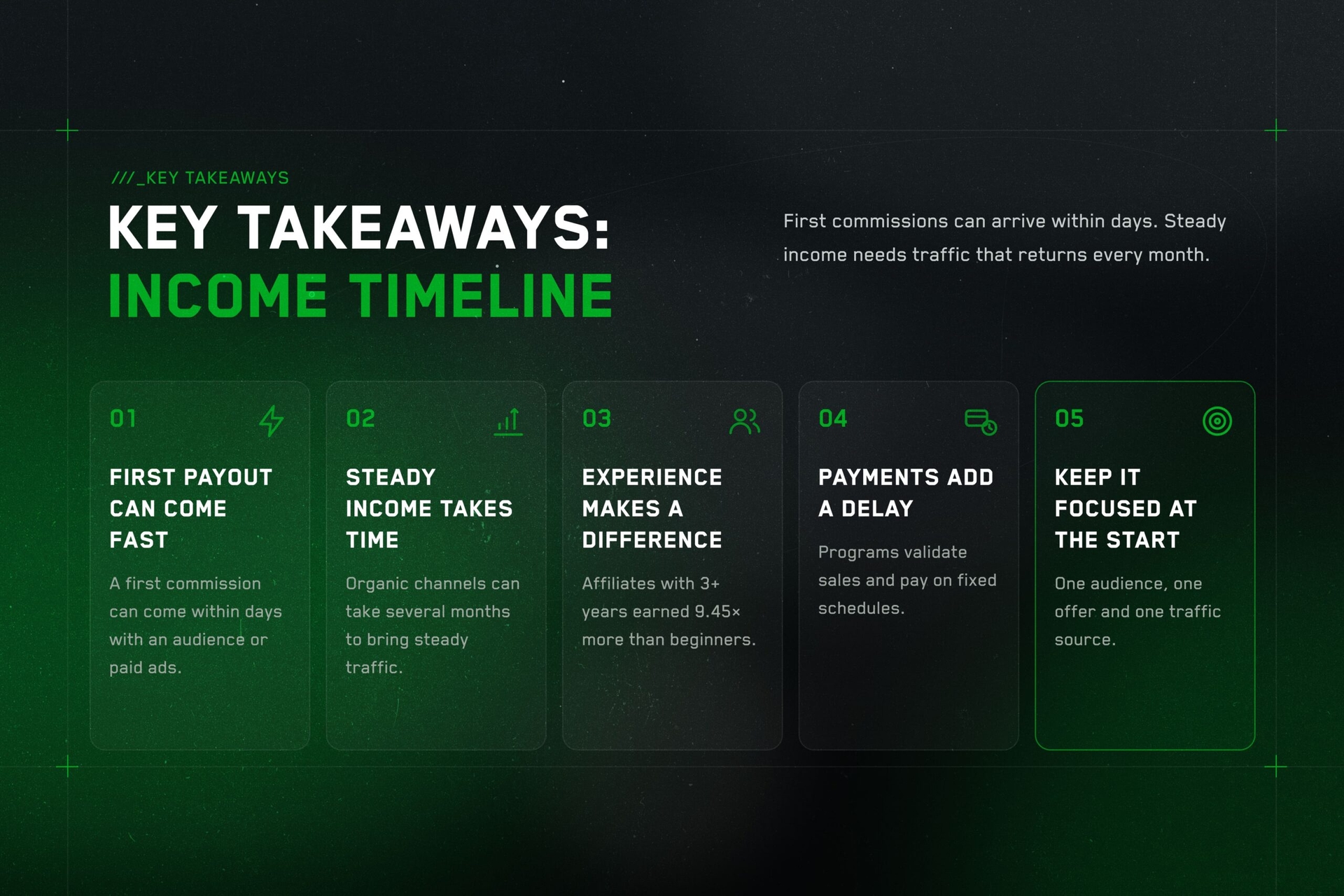
- A first commission can be recorded within days when an affiliate already has an audience or runs paid campaigns. Starting from scratch with organic traffic usually takes longer.
- Consistent monthly income needs traffic that returns every month, and organic channels can take several months to deliver it.
- In the Authority Hacker survey of 2,270 affiliate marketers, those with three or more years of experience earned 9.45 times more than beginners.
- Payment timing adds its own delay, because programs validate sales and pay on fixed schedules.
- Focusing on one audience, one offer and one traffic source is a practical way to shorten the early stage.
The Short Answer: When Affiliate Earnings Can Start
Affiliates who already have an audience, such as an email list, a social following or regular viewers, can record initial commissions within days of their first recommendation. Paid campaigns can also produce a first sale quickly, depending on the budget and the offer. Starting from scratch with organic traffic takes longer, since search engines and social platforms need time to find and rank new content.
Google’s documentation gives a useful reference for search. Its SEO Starter Guide says that some changes to a site might take effect in a few hours and others could take several months, and that waiting a few weeks is a sensible way to judge whether the work helped. Content that depends on search follows the same rhythm.
An initial commission and steady income are two different milestones. The first one confirms that a recommendation, a link and a program work together. The second one needs enough traffic and enough repeat conversions to produce a similar result each month, and that stage is reached gradually.
For planning, it helps to treat the first three months as a period for learning which topics, offers and formats attract readers. Setting realistic expectations at this point makes every early result easier to read. A single sale in week three is a good sign, and an empty first month is a normal part of building.
Beginners in affiliate marketing who track every test learn faster, because each page, post or video is a small experiment and the clicks and sales it records show what to repeat.
What ‘Making Money’ Means in Affiliate Marketing
In affiliate marketing, the phrase covers several different goals. For one person it means a first payment, for another it means covering the cost of hosting and tools, and for a third it means replacing a salary. Each goal has its own timeline, so it helps to define the target before measuring the speed.
First Commission vs. Profit
A first commission is the moment a program records a commission for a referred customer. Profit is what remains after costs. The difference matters most for affiliates who buy traffic. Suppose a campaign converts 2% of clicks and each sale pays $40. Every click is then worth $0.80. A click that costs $0.50 leaves $0.30 before other expenses, while a click that costs $1.20 does not break even. These figures are hypothetical, and they show why the cost of traffic belongs in the calculation from the first day.
Costs that reduce profit are worth listing early:
- Domain and hosting for a website
- Email platform fees
- Design, video and writing tools
- Ad spend on paid campaigns
- Subscriptions and training
Payment timing is the second reason a recorded commission and the first payout are separate events. Each program sets its own schedule. ClickBank, for example, issues payments by default on Fridays, two days after the end of the pay period. Accounts with direct deposit can opt into weekly payouts, and other accounts are paid every two weeks. A weekly schedule does not by itself mean a fast first payment, because ClickBank’s payment article says the account must first meet the Customer Distribution Requirement, which asks for at least five sales made with at least two of the listed payment methods, and then reach the payout threshold. The threshold defaults to $100 and can be set between $10 and $1,000,000. Banks may need a few business days to post the money. Shopify’s affiliate program tracks referrals for 30 days after a click and posts commissions monthly, with a $10 minimum before payment by direct deposit or PayPal.
A commission recorded in the first week can therefore reach a bank account several weeks later. Programs may also set their own windows for new affiliates. Amazon Associates, for instance, gives new members 180 days from the date of application to refer sales, and its team evaluates the application once three qualifying sales are recorded. Reading these terms before launch gives a more accurate picture of the first payment date.
Consistent Monthly Income vs. Full-Time Income
Consistent monthly income means that affiliate income repeats at a predictable level from one month to the next. Full-time income means that the amount covers living costs, and the threshold is personal. Someone with low expenses may reach it sooner than someone with a family to support, so the same business can be full-time for one person and part-time for another.
The best-known benchmark comes from Authority Hacker’s survey of 2,270 affiliate marketers, which reports an average of $8,038 per month. The survey was sent to the company’s own email list of more than 100,000 subscribers and also promoted on its podcast and in social communities, and the average respondent had 2.8 years of experience. The figure describes that group of respondents at one point in time.
Simple arithmetic shows what each income target asks of a website or channel. The table below uses the same hypothetical inputs as the example above: a 3% click-through rate to the merchant, a 2% conversion rate and $40 per sale. At those rates, each visitor is worth $0.024.
| Monthly income target | Visitors needed per month | Sales needed per month (rounded) |
| $100 | About 4,200 | 3 |
| $500 | About 20,800 | 13 |
| $1,000 | About 41,700 | 25 |
| $3,000 | 125,000 | 75 |
The table makes the timeline easier to picture. A site that grows from a few hundred visitors to several thousand in its first year can reach the first rows. Reaching the lower rows takes longer, and higher conversion rates or higher payouts per sale move every row up the table.
A Realistic Affiliate Marketing Timeline From Scratch
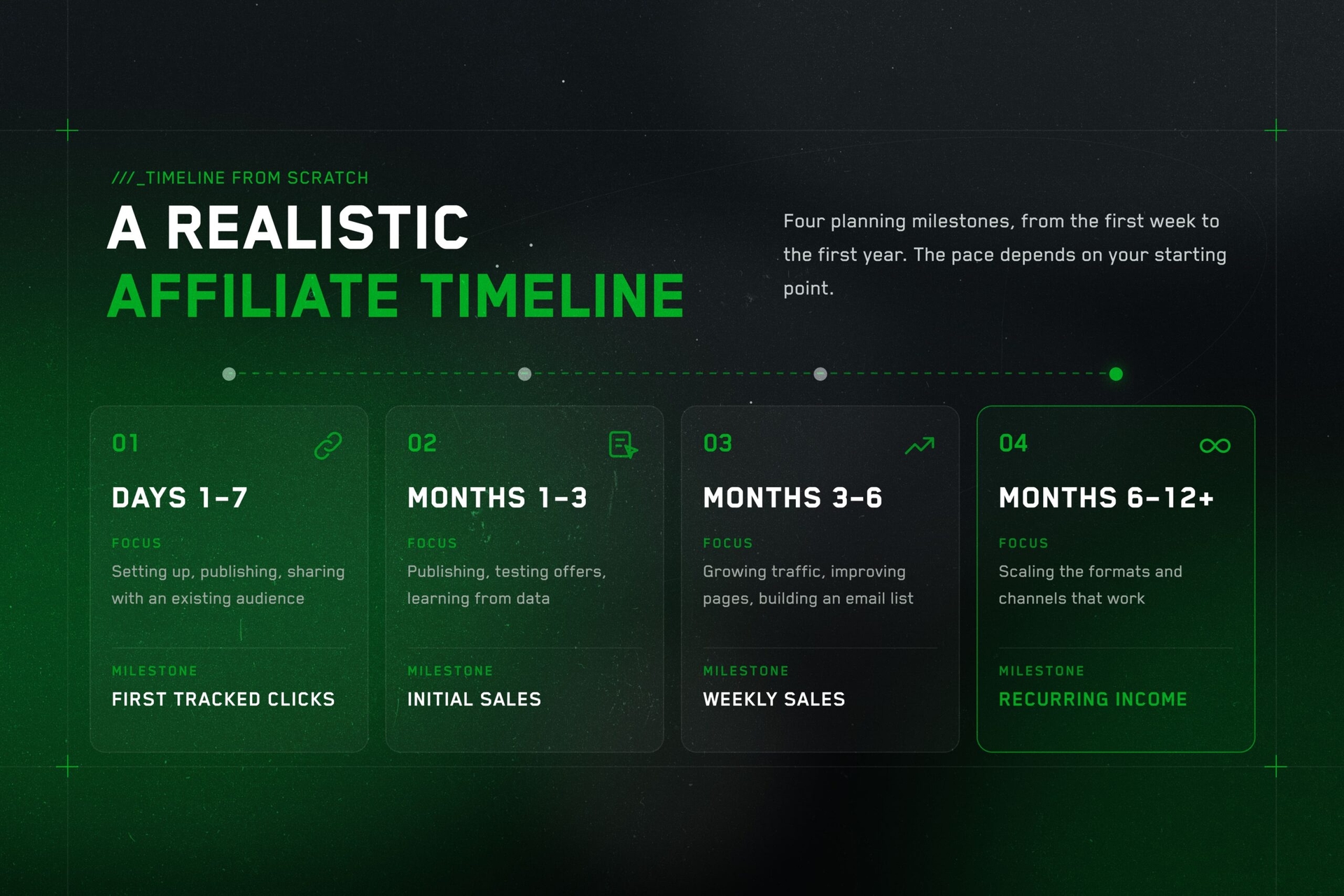
The four stages below are planning milestones. They describe what an affiliate typically works on and what result is reasonable to aim for, and they move faster or slower depending on the factors covered later in this guide.
| Stage | Main focus | Milestone to aim for |
| Days 1–7 | Setting up, publishing, sharing with an existing audience | A working link and the first tracked clicks |
| Months 1–3 | Publishing, testing offers, learning from data | Initial sales and a clear picture of what readers click |
| Months 3–6 | Growing traffic, improving pages, building an email list | Sales on a regular weekly rhythm |
| Months 6–12 and beyond | Scaling the formats and channels that work | Income that repeats each month |
Days 1–7: Fast Results With Existing Traffic or Paid Campaigns
The first week favors affiliates who already have visitors or viewers. A newsletter, a social account or a YouTube channel gives a recommendation to an audience on the first day, and a well-matched offer can convert quickly. A beginner with no audience can still use this week to prepare, so the second week starts with everything in place.
A practical first-week sequence looks like this:
- Choose one audience and one problem it wants to solve.
- Join one affiliate program with products that fit that problem.
- Check the program’s terms for allowed traffic, tracking windows and payment dates.
- Publish one piece of content that recommends the product and explains why.
- Add a clear disclosure beside the recommendation.
- Confirm that the tracking link records clicks.
On disclosure, the FTC’s guidance for social media influencers says that the disclosure of a material connection should appear with the endorsement itself, in the video for video content, and in plain words such as “ad”. Platform tools alone are not enough. Clear disclosure protects the audience’s trust from the first post.
Paid campaigns are the second route to quick results. A small test budget sends visitors to a landing page or a review soon after approval, and the data arrives quickly. Because every click has a cost, the click-value calculation from earlier becomes the guide. Starting with a modest budget keeps the learning affordable while the offer and the message are tested.
Months 1–3: Build the Foundation and Test Offers
The first three months are for building a base. An affiliate publishes regularly, tests two or three offers and watches which pages receive visits and clicks. Niche selection matters most here, because a topic with steady interest and clear buying intent gives early content a better chance of finding readers.
Social media gives a new affiliate a way to reach readers before search rankings arrive. Short posts and videos on one platform are enough to begin, and a steady presence on social media lets followers get to know the affiliate’s recommendations. Platform rules differ on links in posts and bios, so it helps to read them before the first post.
Content creation follows a rhythm in this stage. Some affiliates set a weekly schedule, such as one in-depth article, one short video or a set of social posts, and keep to it. Reviews, comparisons and how-to guides help readers decide, and each piece becomes a place where a recommendation can appear.
An initial commission often arrives during these months, and it carries information as well as money. It shows which page, which offer and which source produced a result. Even a single sale is enough to guide the next round of content.
Early sales are small in number, and the arithmetic explains why. At the hypothetical rates above, about 1,667 visitors produce one sale. A site with 500 visitors in its first month would be expected to record about 0.3 sales, so zero or one sale is a typical outcome. That result reflects the size of the audience and says nothing about the quality of the work.
An email list can start in the first month. A simple signup form, offered with a short guide or checklist, begins collecting readers who want to hear from the affiliate again. Social media accounts can start at the same time, since regular posts build familiarity and send early visitors to the main content.
Months 3–6: Grow Traffic and Work Toward Consistent Income
By the third month, the first pieces of content may have been live long enough for search engines to evaluate them. Google’s guidance that some changes take several months fits this stage. Pages that begin to gain impressions deserve updates, internal links and additional detail, and the best performers often show where to publish next.
Traffic sources start to work together in this period. A search visitor joins the email list, a newsletter reader shares a page on social media, and a short video brings viewers to a detailed review. Each source adds visitors, and the combined effect lifts both traffic and conversion.
Sales usually begin to follow a weekly pattern as the content library grows. Results can also cluster on a handful of pages, and in that case updating those pages first is the quickest way to raise the monthly total. Purchases after an email send tend to arrive within the first days, while purchases from search arrive more evenly.
Traffic that matches the offer converts better than traffic that arrives by chance. A hundred visitors who searched for a specific product often carry stronger buying intent than a thousand who arrive from a broad headline. The goal for this stage is a result that repeats, even at a modest level. A month with sales from several different pages shows that the system works, and that is the foundation for consistent income.
Tracking becomes more valuable as the data grows. A monthly review of clicks, conversions and commissions by page shows where improvements pay off, such as a stronger call to action, a clearer comparison table or a better match between the content and the offer.
Months 6–12 and Beyond: Scale What Works
After six months, the data points toward the formats, topics and channels that produce sales. Scaling means giving more time to those and less time to the rest. An affiliate might publish more articles in the best-performing topic, build a series around a successful video, or add a second program with a related product.
Older pages need attention at this stage. Prices, features and program terms change, and a quick review every few months keeps recommendations accurate. Updated pages can regain visibility in search, and readers who find current information are more likely to click. A simple calendar for these reviews makes the work routine. Adding a new format, such as a comparison video or a monthly newsletter, gives the same research a second audience.
The Authority Hacker survey adds a useful perspective on the longer horizon. Its respondents averaged 2.8 years of experience, and those with three or more years earned 9.45 times more than beginners. The survey also reports that 45.3% of affiliates name getting traffic as their biggest challenge, which makes traffic a natural focus of the first year. Experience and traffic grow together over time.
Some affiliates also add help at this stage: a freelance writer for content creation, a video editor, or an assistant for email. This frees time for strategy and for the relationships with program managers that can lead to better terms.
Factors That Determine How Quickly You Earn
Four groups of factors explain most of the difference between a fast start and a gradual one in affiliate marketing. Each one connects to a choice the affiliate can make.
Your Starting Point and Existing Audience
An existing audience is the single biggest shortcut. Readers who already trust an affiliate’s recommendations are more likely to click, and the first sale does not wait for search rankings. An email list, a social following or a community of viewers all qualify.
Starting from scratch is still a clear path. The work is the same, and the first stage is spent building the audience that others already have. Beginners without followers often choose a narrow topic so that the first readers find exactly what they need.
Even a small audience helps. A social media following of a few hundred engaged people can produce early clicks when the topic fits the offer, because followers who chose to follow a topic are already interested in it.
Skills and contacts count as part of the starting point too. A developer reviewing software or a teacher comparing learning tools starts with knowledge that readers value, and that knowledge shortens the learning curve.
Traffic Source: Paid, Organic, Social, or Email
Each of the main traffic sources has its own speed. The table below compares them in general terms.
| Traffic source | Speed to first visitors | What shapes results |
| Paid ads | Hours to days | Budget, targeting, offer match |
| Organic search | Weeks to months | Content quality, relevance, site authority |
| Social media | Days to weeks | Posting frequency, audience fit, platform rules |
| Email list | Immediate for existing subscribers | List size, relevance, trust |
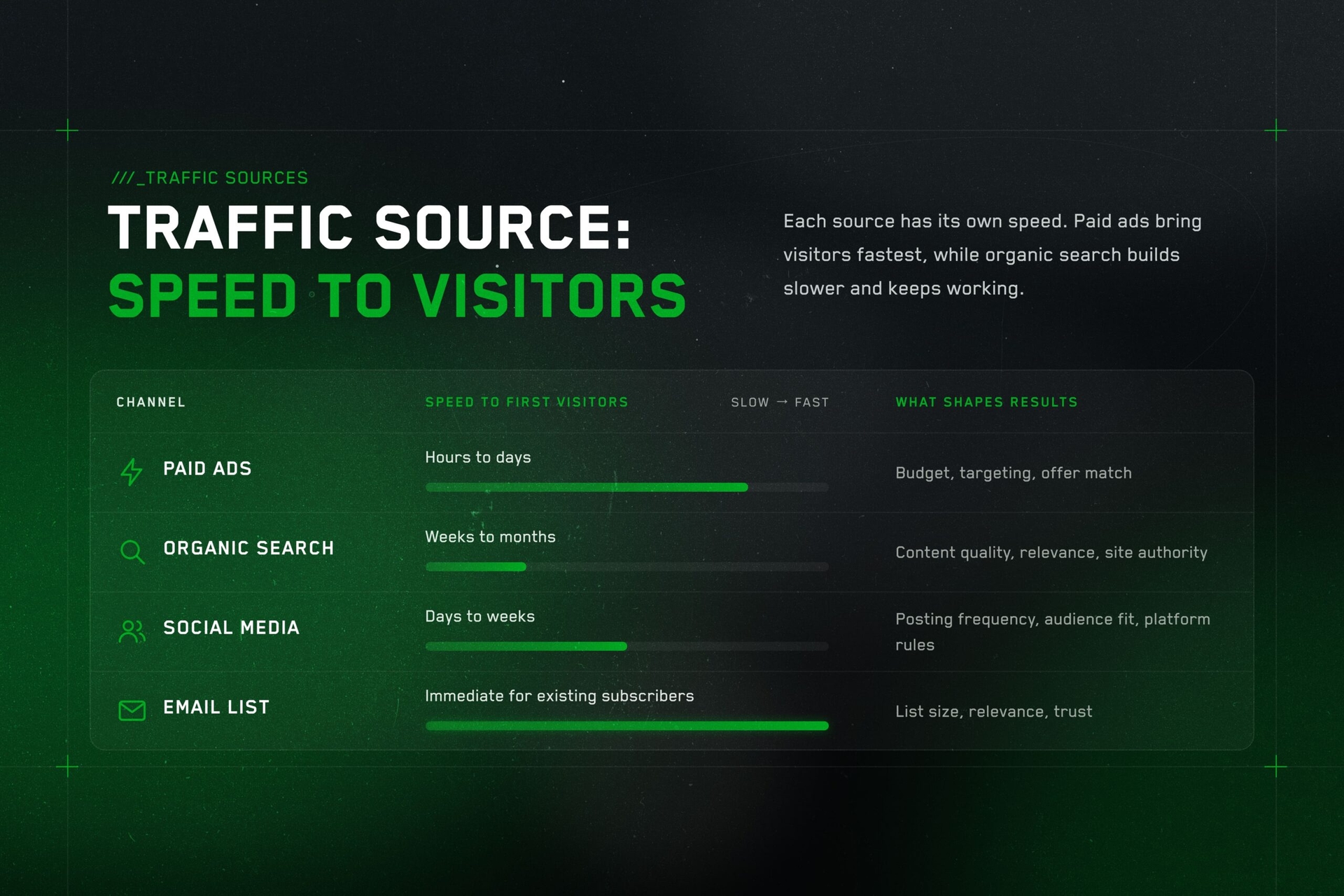
Paid campaigns offer the quickest visitors and ask for a budget. Organic search builds more slowly and keeps working after publication, which is why 78.3% of respondents in the Authority Hacker survey, as reported by Ahrefs, use SEO as a primary traffic source. Social media can bring early attention, and the platform’s rules decide how and where links appear. An email list gives repeat access to the same readers.
In the impact.com State of Affiliate Marketing 2025 report, 59% of brands plan to put at least 25% of their affiliate budgets toward creator partnerships. For creators who build an audience on social media, that points to growing brand interest in their work.
Niche Demand, Competition, Products, and Commission Rates
Niche selection affects speed in two ways. A topic with high demand sends more readers to the content, and a topic with fewer competing sites makes it easier for new content to be seen. A narrow niche inside a larger one often balances both.
The Authority Hacker survey asked respondents about 19 broad categories, with no category above 10.8% of the sample. It named Education and E-Learning, Travel, and Beauty and Skincare as the three most profitable niches among its respondents. Those results describe that survey. They show that several different niches can support affiliate income.
The products matter as much as the topic. Products that solve a visible problem are easier to explain, which helps sales. Affiliate products with clear value, fair prices and a good reputation convert more easily, and reliable affiliate programs publish their terms in detail. A higher commission rate or a flat payout above the typical level in a niche raises the value of every sale, which shortens the time to a given income target. Shopify’s program, for instance, lists up to $150 per qualified referral, with amounts that vary by location.
Experience, Skills, Tools, and Consistent Execution
Skills compound. Writing, search optimization, video production, email marketing and data analysis each make the next piece of content stronger. Tools such as keyword research software, email platforms and link trackers save time and give clearer data.
Consistent effort carries more weight than any single tactic. Weekly publishing, monthly reviews and regular updates to older pages all add up, because the work builds a library that keeps producing. The Authority Hacker survey also reports that affiliates earning $10,000 or more per month are 1.5 times more likely to socialize with other affiliates, and community appears to play a role in how affiliates learn.
How to Start Earning Affiliate Income Faster
Several habits help affiliate income arrive sooner. Each one reduces the time between the first idea and the first tracked result.
Focus on One Audience, Offer, and Traffic Source
Early focus beats breadth. One audience, one offer and one channel make it easier to learn what works, because each result can be traced to a single cause. Spreading across several programs and platforms at once divides the time available and slows the learning.
A practical test is to write one sentence that names the reader, the problem and the product. If the sentence is clear, the content almost writes itself. If it is vague, the niche selection needs another look.
After the first channel produces steady results, a second one can be added. The learning from the first one carries over, and the second channel starts with a tested message.
Build an Owned Audience and Track Conversions
An email list belongs to the affiliate. Subscribers receive recommendations directly, platform changes do not affect the list, and replies show what they want to read. Offering a short guide, a checklist or a comparison in exchange for an address is a common way to start.
Tracking turns activity into information. Use a distinct tracking label for each page and channel, and review clicks, conversion rates and commissions every month. The page with the most clicks and the page with the most sales are sometimes different, and the sales data should guide the next decision.
Small conversion gains compound quickly. A clearer call to action, a comparison table near the top of a page, or a review that answers the most common question can each raise the share of visitors who buy, and the improvement applies to every future visitor.
Avoid Shortcuts and Mistakes That Delay Results
Some choices slow progress, and knowing them in advance saves time:
- Joining many affiliate programs at once, which divides attention
- Skipping the program terms on allowed traffic, tracking windows and payment dates
- Leaving out disclosure, which can cost reader trust
- Judging results after a few days when organic channels need weeks or months
- Tracking clicks without tracking sales, which hides what converts
- Applying income screenshots from other sites directly to a new site
Conclusion
Affiliate marketing can produce initial sales in days for affiliates with an audience or a paid budget, and organic channels often take several months to build steady income. The speed depends on the starting point, the traffic source, the niche, the products and the quality of the work behind them.
A first payment followed by regular sales is the pattern to aim for. A workable plan starts with an income target, estimates the traffic it needs, picks one audience and one offer, and reviews the numbers every month. Growe Partners works across casino and betting products, with conditions defined for specific offers. Affiliates can review current requirements at Growe Partners and compare them with the checklist in this guide.