///_Articles
Free Traffic for Affiliate Marketing: 10 Organic Channels and a Practical Strategy

Most affiliates start with the same question: where do the first visitors come from when there is no ad budget? Free traffic for affiliate marketing is the usual answer, and it covers everything from a blog post that ranks in Google to a helpful reply on Reddit. Each channel asks for time and skill, and each one rewards a different kind of effort.
This guide walks through ten free traffic sources, shows how to choose between them and explains how to build a plan around one or two. It also looks at the part many guides skip: measuring results by source, so you can see which channel deserves more of your time.
Affiliate marketing programs differ in what they allow, so check the terms of your program and each platform before you publish anything.
What Is Free Traffic in Affiliate Marketing?
In affiliate marketing, free traffic is any visit that reaches your content or affiliate link without a paid click or impression. A reader may find an article in search, watch a video, open a newsletter or follow a link in a forum thread. The cost shows up in hours spent on research, writing, filming and replying, which is why “free” needs some qualification.
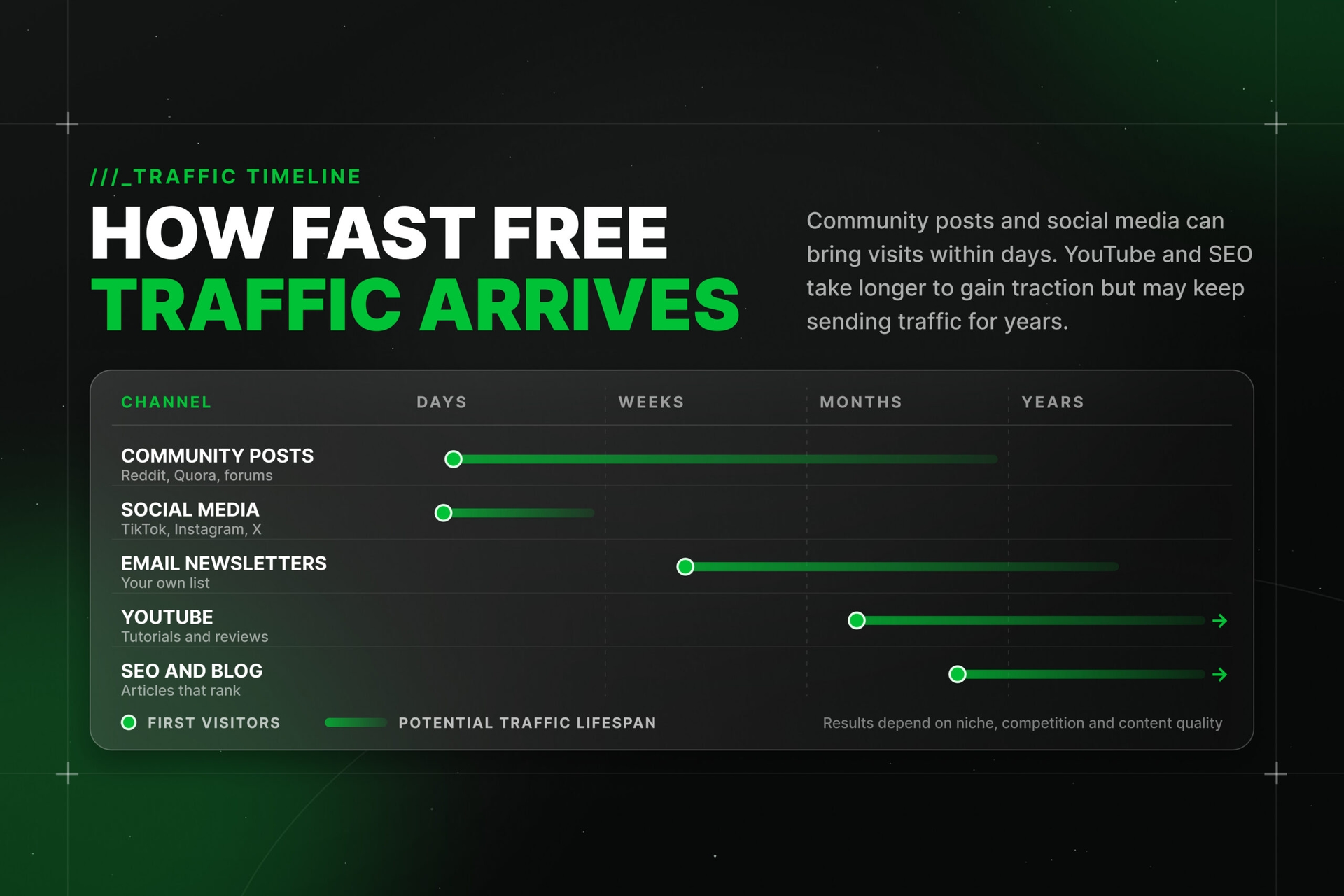
Marketers also call it organic traffic or unpaid traffic. In this article, a free traffic source means any channel that can send visitors without ad spend. Some free traffic sources, such as SEO, can keep working for years after the content is published. Others, such as a social media post, may deliver most of their visits within a few days.
Speed deserves a realistic look. Free traffic from search and video usually needs months to gain momentum, while a community answer or a short post can send a few clicks within a day. Neither pace is guaranteed, and results depend on the niche, the competition and the quality of the content.
Free vs. Paid Traffic: Cost, Speed, and Control
Paid ads buy attention directly. An ad network or a social platform shows your message to a chosen group of users, and visits begin as soon as the campaign is approved. That speed comes with a running cost, and the visits stop when the budget does.
Free traffic keeps working after publication: a guide, video or pin can send visitors without extra spend. You depend on platform algorithms and on your own publishing rhythm, and you control less than you would with a targeted ad.
| Factor | Free traffic | Paid channels |
| Cost | Time and production | Media spend plus production |
| Speed | Slower to start | Starts once the campaign is live |
| Control | Limited by algorithms and rules | Targeting and budget settings |
| Longevity | Content can keep working | Stops when spend stops |
In affiliate marketing, most people end up using both. A common pattern is to learn which affiliate offers and angles work through free traffic, then put budget behind the ones that convert. Starting with free traffic also gives you data before any money is at risk.
How to Choose the Right Free Traffic Sources
Ten free traffic sources can look overwhelming, and trying all of them at once usually produces thin content everywhere. A more reliable method is to filter the list by who you want to reach, what you can produce consistently and how quickly you need a signal.
Match the Channel to Your Audience, Niche, and Content Strengths
Start with the audience. Visitors who ask a question in Google want an answer, viewers who browse short video feeds want entertainment first, and email subscribers want something they chose to receive. A channel works when your offer fits the mood of the people who are there.
Your niche narrows the list further. Software and finance topics fit written comparisons and tutorials. Fitness, beauty and home products suit visual platforms, where products are easy to show. Hobby and gaming topics often have active forums where members ask each other for recommendations.
Then look at your own strengths. If you write well and enjoy research, a website with SEO articles fits. If you are comfortable on camera, YouTube or TikTok gives you more room. If you prefer one-to-one conversations, communities and email suit you better. Whatever you pick has to be something you can keep doing for at least six months.
Compare Search Intent, Content Shelf Life, Effort, and Scalability
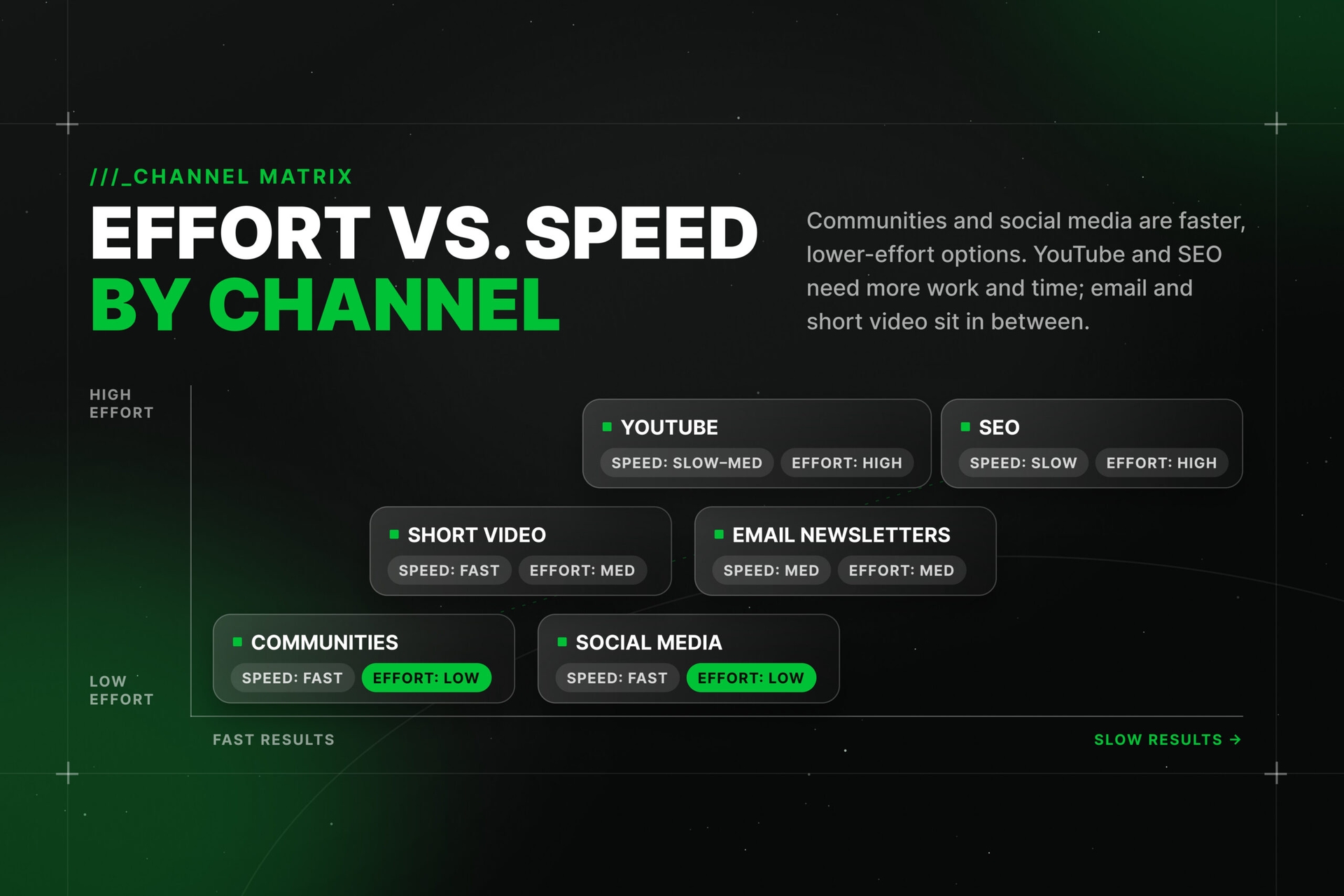
Four criteria make it easier to compare each free traffic source side by side:
- Search intent: whether visitors arrive looking for a solution, as they do in search, on YouTube and on Pinterest, or discover content while browsing, as they do on social media feeds such as TikTok and X.
- Content shelf life: how long a piece keeps sending visitors after it is published.
- Effort: the time each piece takes and the skills it needs, such as writing, editing or speaking on camera.
- Scalability: whether results grow when you publish more, or whether the channel reaches a ceiling.
Search intent matters most for affiliate offers. A person typing “best project management software for freelancers” is already comparing products, while a person watching a short clip may not be ready to buy anything. Social platforms can still work, but the content there usually has to create interest first, and the link comes later.
Shelf life is the second filter. A blog article or a YouTube video can bring visitors for years, while a social media post or a TikTok clip may be seen mostly in its first days. Short-lived content is not wasted, since it can feed other channels, but it needs steady replacement.
Best Free Traffic Sources for Affiliate Marketing
The ten channels below cover search, video, social platforms, communities, email and outside publications. They are the best free traffic sources for most affiliates, although how well each one performs depends on the niche and the offer.
SEO and Blog Content
Search engine optimization (SEO) is the most common free traffic source for affiliates. You publish pages that answer specific queries, such as product comparisons, tutorials and “best of” lists, and Google sends readers who are already looking for those answers. The links inside such a page meet a reader who is in the middle of a decision, which suits affiliate offers well.
A basic SEO setup needs a website, a short list of target keywords and a page that matches the search intent behind each one. Review pages, comparison tables and how-to guides suit affiliate marketing content because they help a reader decide. Add original details such as screenshots, test notes or prices you checked yourself, since generic summaries are easy to replace.
SEO results build slowly, and a new website may wait a while before its pages gain visibility. Update older posts when prices or features change, because outdated pages lose trust with both readers and Google. Search results also include AI-generated answers in some cases, so clear headings, direct answers and accurate details make a page easier to use for people and for search engines.
YouTube and Organic Video
YouTube is a strong free traffic source for tutorials, reviews and comparisons because it works as both a video platform and a search engine. A viewer who searches “how to set up an email list” is open to tool recommendations, and the video can answer the question while showing the product in use.
Videos take longer to produce than articles, but a single upload can appear in YouTube search and in Google results. Put the affiliate link and a clear disclosure in the description, and mention the relationship in the video itself. Video SEO follows the same logic as page SEO: a title that matches the search phrase and a first minute that gets to the point both help retention.
TikTok, Instagram, Pinterest, and X
Social media platforms reward consistent posting and content that fits their native format. Each one is a separate free traffic source with its own rules, and affiliates use them to introduce a product, show results and send interested viewers to a page where the offer is explained. The links usually sit in a profile, a description or a story, so the content has to give people a reason to click.
TikTok favors short vertical videos, and product demos, quick comparisons and “what I tested” clips are common formats. Reach can rise quickly on a single clip, but views from a feed do not always turn into clicks. Use a clear call to action and a profile link that matches the video.
On Instagram, Reels bring discovery, while stories and the link in your bio handle the click. Visual niches such as fitness, beauty, travel and home decor fit Reels and stories naturally.
Pinterest behaves more like a visual search engine than a feed. A pin with a clear image and a keyword-rich description can keep appearing in results long after it was posted, which suits evergreen topics such as recipes, planning guides and product roundups. Check the current Pinterest rules on affiliate links before you pin.
X suits real-time commentary, news-driven niches and conversations with other creators. A thread that shares a useful finding, with a link to the full guide in a reply, can send targeted visits, but the feed moves fast, so a topic needs to be repeated in new forms.
Reddit, Quora, Niche Forums, and Online Communities
Communities send free traffic when you take part in them. On Reddit, Quora and niche forums, people ask for recommendations every day, and a detailed answer can help a reader while pointing to your guide as a source. The same thread can keep attracting visitors from search for a long time.
Rules differ by community. Many subreddits and forums restrict self-promotion or links, and moderators remove posts that read like ads. Read the rules, spend time answering questions without links and mention affiliate relationships when you recommend a product. If you have no history in a community, start there before you share anything of your own.
Facebook Groups, Discord servers and Skool communities work in a similar way, except that you can build the group yourself. A small community around your niche gives you a place to answer questions, collect ideas for new content and learn which products your readers actually discuss.
Email Marketing and Newsletters
Email marketing gives you an audience you own more directly than any social account. Subscribers have chosen to hear from you, and no algorithm decides who sees the next message. In affiliate marketing, a list is a stable place to recommend products over time, and it works as a free traffic source for every new piece you publish.
Building a list needs a reason to subscribe. A checklist, a template, a short course or a weekly roundup gives people a reason to sign up, and every other channel in this article can point visitors to the form on your website. Use a double opt-in or a clear consent step, and follow rules such as GDPR and CAN-SPAM for the regions you send to.
Once people have joined, send useful messages before sending offers. A welcome sequence that explains the topic and answers common questions builds trust, and affiliate recommendations then arrive in a context readers understand. Track which links get clicks so you know which topics deserve another issue.
Guest Posts, Podcast Appearances, and Referral Links
Other people’s audiences can send you free traffic without a platform of your own. Guest posts on niche blogs, podcast interviews and contributions to newsletters put your name in front of readers who already trust the host. A bio or show-notes link then sends interested people to your website.
Pitch where the audience overlaps with yours, and offer something specific, such as a tested process or an original data point. A relevant mention on a small publication can bring well-matched visitors.
Referral links come from places that point to your website: resource pages, directories, partner newsletters and tool lists. Earn them by publishing material worth referencing. Links that look forced or bought can harm search performance, so aim for mentions that a reader would actually follow.
Affiliate Disclosure and Platform Rules
Disclosure applies to every free traffic source above. In the United States, the Federal Trade Commission expects clear disclosure of material connections, which includes earning a commission from a link. Place the disclosure next to the link or recommendation, in plain language, for example: “I earn a commission if you buy through this link.” The FTC notes that readers may not understand the term “affiliate link”, so that label alone is not enough. On a short social media post, #ad can sit beside a one-line explanation.
Platforms add their own conditions for free traffic. Some limit external links, some require branded-content labels and some restrict whole categories. Gambling and betting content faces tighter limits on many platforms and in many countries, including age restrictions and licensing rules. Read the current policy of each platform and of your affiliate program before you publish, since both change over time.
Free Traffic Sources Compared
The table summarizes how each free traffic source differs. The ratings are general guidelines, since competition and execution change the outcome.
| Channel | Visitor intent | Time to results | Content shelf life | Effort | Scalability |
| SEO and blog | High | Slow | Long | High | High |
| YouTube | High | Slow to medium | Long | High | High |
| TikTok | Low | Fast | Short | Medium | Medium |
| Low | Medium | Short | Medium | Medium | |
| Medium | Medium | Long | Medium | Medium | |
| X | Low | Fast | Short | Medium | Low |
| Reddit and Quora | Medium to high | Fast to medium | Medium to long | Medium | Low to medium |
| Forums and online communities | Medium to high | Medium | Medium to long | Medium | Low to medium |
| High, opted in | Medium | Long | Medium | High | |
| Guest posts and podcasts | Medium | Slow | Medium to long | High | Medium |
Use the table of free traffic sources as a starting point instead of a ranking. A channel with a low scalability score can still be the right choice if your audience gathers there and you enjoy the work.
How to Build a Sustainable Free Traffic Strategy
A sustainable plan for free traffic has few moving parts: a small set of channels, a publishing schedule and a regular review of results.
Start with One Primary Channel and One Supporting Channel
Choose one primary channel where most of your effort goes and one supporting channel that sends visitors back to it. A common pairing is a blog as the primary channel with email in support, or YouTube as the primary channel with Pinterest or Instagram in support.
Give the primary channel at least three to six months before judging it. SEO and video need time to be indexed, ranked and discovered, so early numbers say little about long-term performance. Content creation is the main cost of free traffic, so the publishing target has to fit the hours you actually have each week, such as one article or video per week.
Add a third channel only when the first two run smoothly. Spreading across many platforms early produces thin content and makes it harder to see what is working.
Repurpose Pillar Content for Each Platform
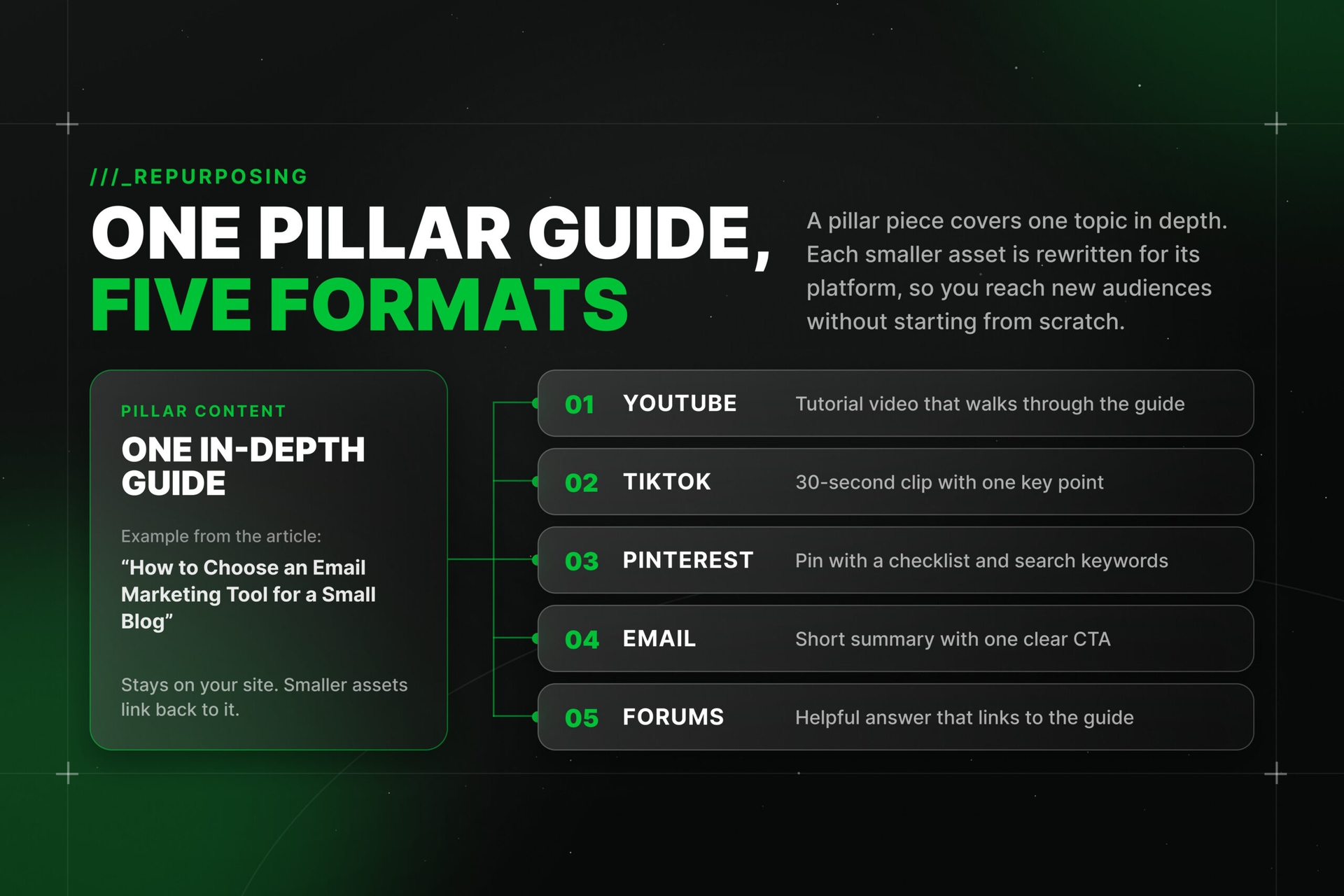
A pillar piece is a detailed guide, video or case study that covers one topic in depth. It becomes the source for smaller assets, each rewritten for its platform.
Take one guide, “How to Choose an Email Marketing Tool for a Small Blog”. It stays on your site, and three smaller assets come from it:
- Short video: take the most useful point, such as the feature that saves the most time, and turn it into a clip of 30 seconds or so. Open with the problem, show the tool on screen and finish with one call to action pointing to the link in your profile.
- Pin: turn the comparison into one clear image, such as a checklist, and write a description that matches what people search for, for example “email marketing tool for beginners”. The pin links to the guide and can keep appearing in Pinterest search long after it was posted.
- Email: send subscribers a short note with the main finding, one personal recommendation and a single link to the guide.
Give each link its own tracking label, as described below, so the three can be compared later.
How to Track and Optimize Free Affiliate Traffic
Free traffic only helps if you know which visits turn into commissions. Without tracking, a channel that sends many clicks and no sales looks the same as one that sends fewer clicks and steady income. Set up tracking before you publish, because links shared without identifiers cannot be traced afterward.
Measure Clicks, Conversion Rate, EPC, and Revenue by Source
Four numbers give a useful picture of each source: clicks, conversion rate, earnings per click (EPC) and revenue. Clicks show how many people moved from your content to the offer. Conversion rate shows how many of those clicks produced a sale or a lead. EPC divides commission by clicks and lets you compare channels of different sizes. Revenue shows the total each source contributed.
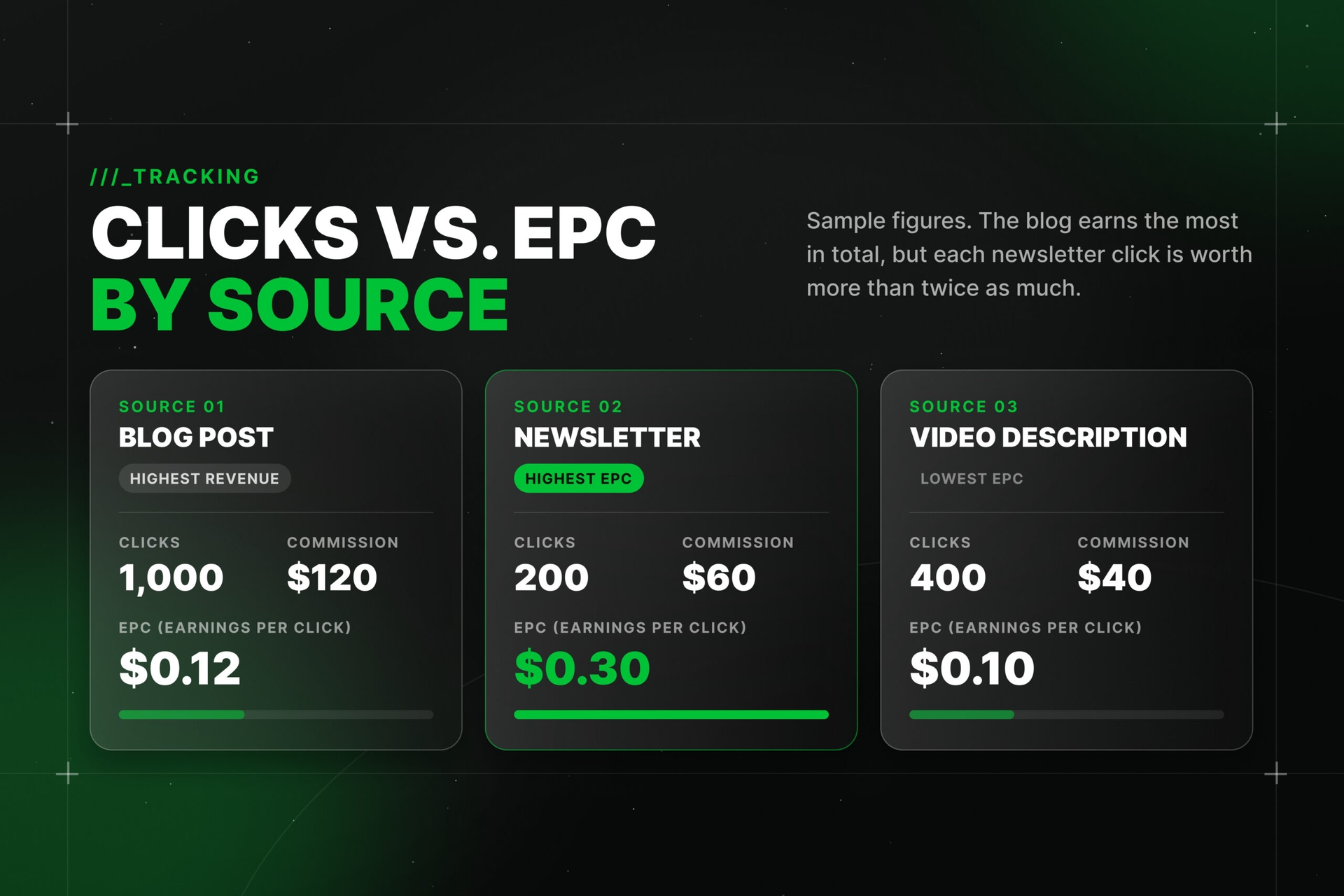
The table below uses made-up figures to show how EPC changes the picture.
| Source | Clicks | Commission | EPC |
| Blog post | 1,000 | $120 | $0.12 |
| Newsletter | 200 | $60 | $0.30 |
| Video description | 400 | $40 | $0.10 |
The blog earns the most in total, but each newsletter click is worth more than twice as much. That suggests the list is worth growing even though its volume is lower.
To track by source, use two kinds of tags. UTM parameters go on links that lead to your own website from newsletters, social posts and outside publications. The three core tags, utm_source, utm_medium and utm_campaign, let Google Analytics show which source, medium and campaign sent each visit in the Traffic acquisition report. Google recommends using all three, since missing values appear as “(not set)”.
Sub IDs, also called tracking IDs, work inside the affiliate program. You add one to the affiliate link itself, and the program’s reports then show clicks, conversions and commissions for that ID. Parameter names differ by program, so check that yours reports at the sub ID level.
Name sources consistently, for example “video-description” or “newsletter-june”, so reports stay readable. For search traffic, Google Search Console shows which queries and pages bring visitors.
Review free traffic numbers on a fixed schedule, such as once a month. Keep content that earns, update content that gets clicks but few sales, and drop formats that take time and produce neither. Look at the offer and landing page as well, since a weak offer can make a good channel look poor.
Common Mistakes and a Practical Next-Step Plan
Most problems with free traffic come from a short list of habits:
- Spreading effort over five or six platforms at the start.
- Judging an SEO or video channel after a few weeks.
- Dropping links without adding anything useful to the conversation.
- Posting without disclosure or tracking identifiers.
- Promoting offers that do not fit the audience of the channel.
- Leaving older content without updates.
A simple plan covers the first ninety days:
- Week 1: pick your niche, audience and two channels using the criteria above.
- Weeks 2 and 3: set up tracking, a disclosure line and a spreadsheet for clicks, conversions and EPC by source.
- Weeks 4 to 8: publish on a fixed schedule, with one pillar piece and smaller assets for the supporting channel.
- Weeks 9 to 12: review the numbers, update the weakest pieces and decide whether to add a third channel.
Conclusion
Free traffic takes time to build in affiliate marketing, and the results come from steady publishing and careful tracking. Start with one primary channel, measure each source on its own and expand when the numbers justify it.
If you work in iGaming, check the offer terms before you plan content. Growe Partners works across casino and betting products, with conditions defined for specific offers, and affiliates can review current requirements at Growe Partners before deciding which channels fit.